Liver Cancer
Liver cancer is the 4th most common cancer among Singaporean men. It can be classified into primary or secondary liver cancer, with the latter referring to cancer that started in other parts of the body and spreading to the liver (liver metastases).
Your risk of developing liver cancer is higher if you:
- Are male over the age of 60
- Have had a family history of liver cancer
- Are suffering from other liver diseases, such as hepatitis and liver cirrhosis
- Indulge in excessive alcohol consumption

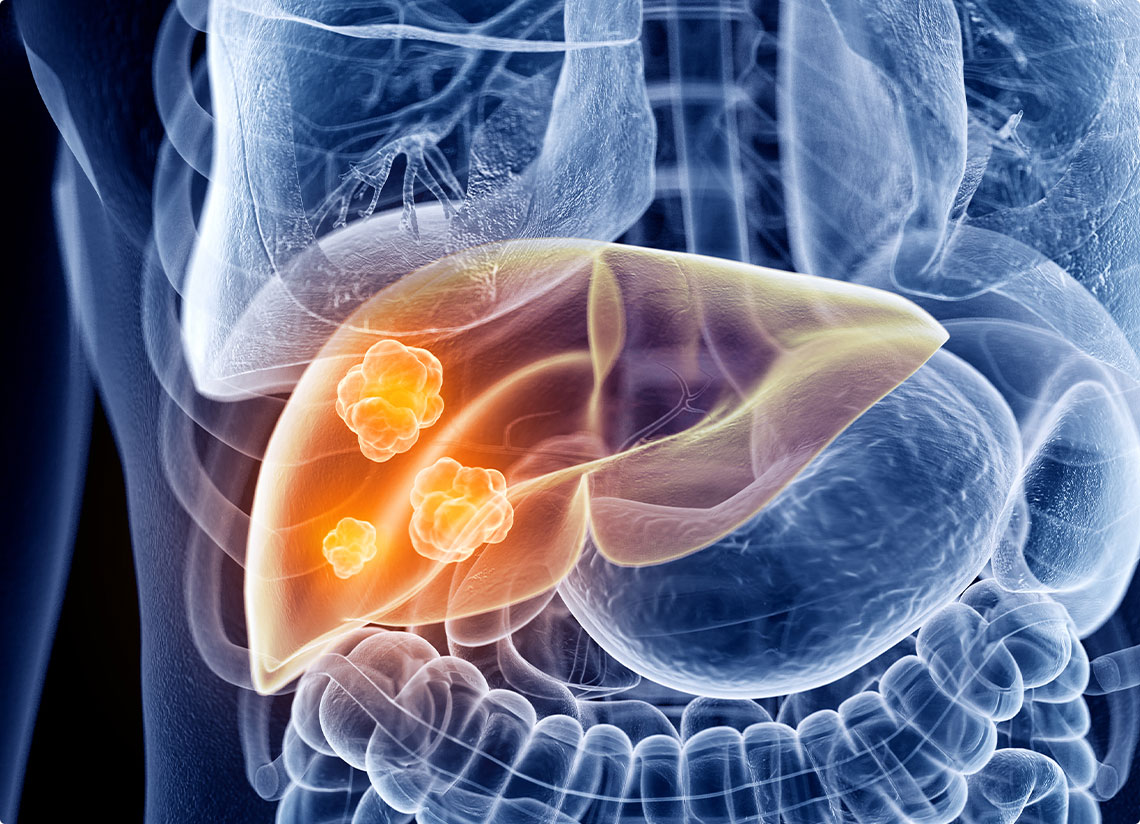
Unfortunately, you might show no symptoms during the early stages of cancer. Screening for liver cancer is typically recommended for people with an increased risk of developing the disease.
Some symptoms of liver cancer include:
- Pain on the upper right side of the abdomen
- A lump on the right abdomen, below the ribcage
- Jaundice
- Sudden unexplained weight loss
- Nausea, weakness, or fatigue
- Dark coloured urine
Also referred to as liver resection, a hepatectomy involves the removal of the cancerous tumour along with some margin of healthy tissues in order to ensure complete removal. A hepatectomy can be performed via open technique or laparoscopy. The procedure is generally not recommended for advanced stages of liver cancer.
A liver transplant involves removing a damaged liver and replacing it with a healthy liver. In some cases, it may also be possible to just remove and replace the damaged parts of a liver. Healthy livers are obtained from either deceased or living donors. Liver transplants are recommended for people who have end-stage liver failure or disease. It can also be used to treat certain cases of liver cancer.
Immediately after a liver transplant, patients will need to take anti-rejection medications (immunosuppressants) in order to suppress their immune system and prevent it from rejecting the newly transplanted liver.
Cancer patients who need a liver transplant may not always have a suitable liver available for them. During this waiting period, the patient could be offered other treatments like ablation therapy to manage their cancer.
Ablation means to destroy; hence ablation therapy destroys the liver tumours without removing them. Ablation therapy is not a cure for cancer, however, and is only recommended in certain situations.
Some types of ablation therapy include:
- Radiofrequency ablation (RFA) - Uses high energy radio waves (electrical currents) to kill the cancer cells
- Microwave ablation (MWA) - Uses electromagnetic waves (heat energy) to kill cancer cells

There are also palliative treatments available for when surgery is deemed not suitable for certain patients with liver cancer:
- Transarterial chemoembolization
- Selective internal radiation therapy
- Percutaneous ethanol injection
- Oral chemotherapy
Fill out the form below and we will call you to schedule an appointment at your earliest convenience.

Sat: 9am to 12pm
Closed on Sunday and
Public Holidays
Gleneagles Medical Centre,
6 Napier Road, #10-01,
Singapore 258499
Tel : +65 6475 1488
Fax : +65 6475 1489
Email : info@liversurgery.com
Mount Elizabeth Medical Centre
3 Mount Elizabeth, #12-14,
Singapore 228510
Tel: +65 6737 8878
Fax: +65 6737 5088
Email: info@liversurgery.com
Mount Alvernia Hospital
820 Thomson Road,
Medical Centre E,
Icon Cancer Centre,
Singapore 574623
Tel: +65 6721 3470
Email: info@liversurgery.com
HMI Medical Centre
12 Farrer Park Station Rd,
Singapore 217565
Tel: +65 6322 6333
Email: info@liversurgery.com